

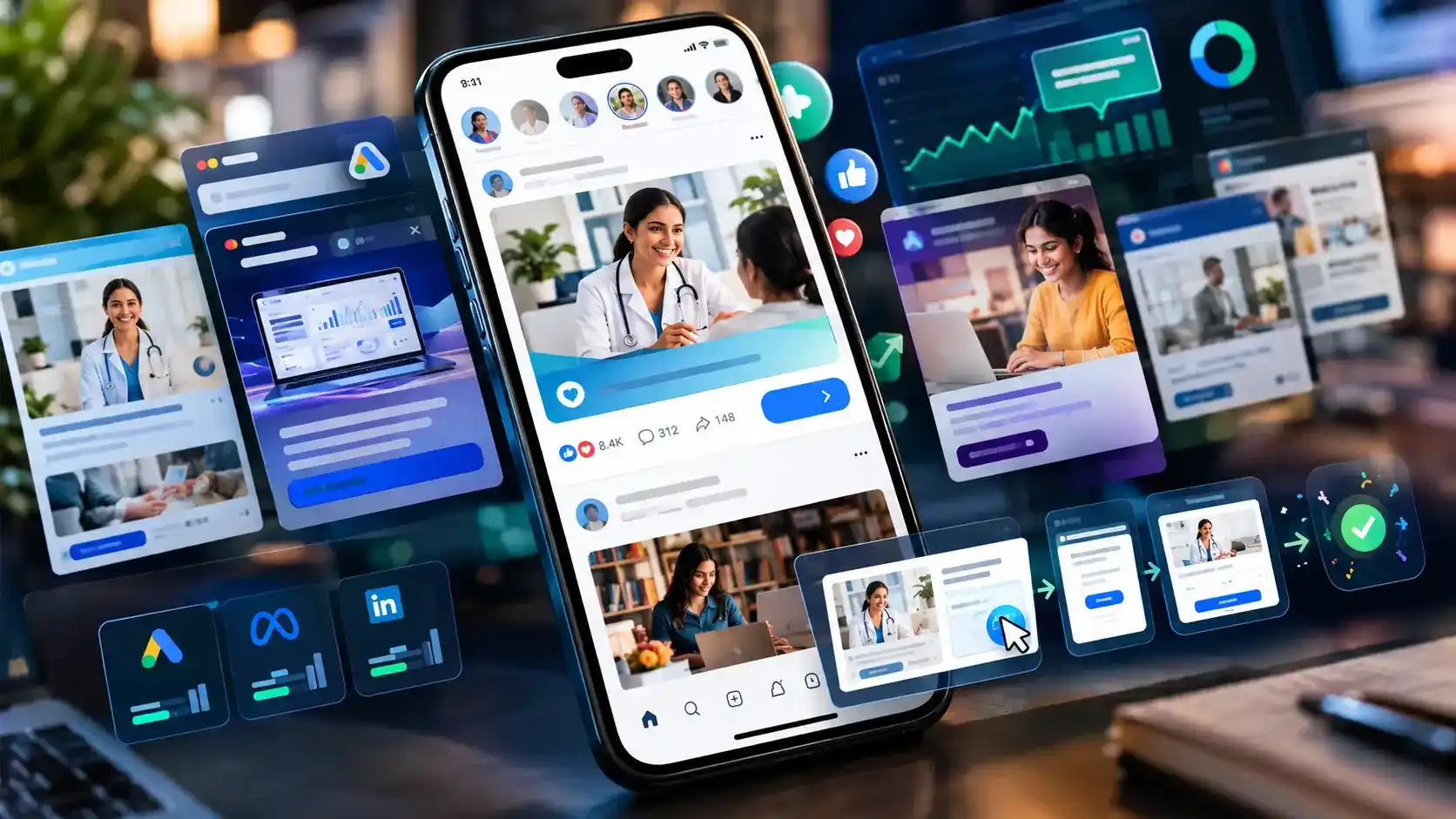
If you analyze hundreds of pay-per-click (PPC) ad campaigns across Google, Meta, and LinkedIn, a clear pattern emerges. The ads that consistently generate massive returns are rarely the ones with big production budgets, complex animations, or clever wordplay.
The top-performing 1% of PPC ads win because they follow a strict set of underlying behavioral principles.
After reviewing 100 high-performing, high-converting PPC ads across diverse sectors—including B2B SaaS, healthcare practices, and educational institutes—we identified the exact creative and copy elements that separate high-ROAS (Return on Ad Spend) campaigns from budget-draining failures.
Here is what the best PPC ads have in common, complete with real-world campaign examples and reference frameworks you can swipe for your own strategy.
1. They Open with a "Problem-First" Hook (Within 3 Seconds)
Underperforming ads usually start with brand introductions or generic announcements. High-converting ads do the exact opposite: they immediately call out a specific, frustrating problem faced by the prospect.
Whether it is a Google Search headline or a video ad on Meta, top campaigns hook the user by naming their exact bottleneck before presenting any product or service.
[Weak Intro Example]: "We Are a Leading Clinical Software Brand"
[High-Converting Hook Example]: "Tired of Front-Desk Staff Spending 3 Hours a Day Making Manual Reminder Calls?"
By framing the opening around the user's immediate pain point, the ad triggers instant recognition, stopping the scroll and driving engagement.
2. They Match the Native Aesthetic of the Platform
The best PPC ads rarely look like traditional, glossy corporate advertisements. On social platforms like Instagram, TikTok, and LinkedIn, hyper-polished banners and stock photography are immediately recognized as "ads" and swiped past.
The top 100 ads we analyzed felt indistinguishable from organic user-generated content (UGC). On Meta, they used casual, smartphone-shot videos or simple screen shares. On LinkedIn, clean PDF document carousels outperformed graphical banner ads by over 2x in click-through rates.
3. Real-World Ad Copy Breakdowns: Low-ROAS vs. High-ROAS
To see how high-performing ads structure their copy for maximum conversions, examine these direct comparisons across key industries:
Example A: B2B Software / CRM Campaign
-
Low-ROAS Copy: "Best Healthcare CRM Software. Free Trial Available. Sign Up Today!"
-
High-ROAS Copy: "Cut Patient No-Shows by 40% | Automated 2-Way WhatsApp Reminders for Clinics"
-
Why It Wins: Replaces feature shouting with a specific, quantified outcome (40% reduction) and names the exact mechanism (WhatsApp reminders).
Example B: Higher Education / Admissions Campaign
-
Low-ROAS Copy: "Top Hotel Management College in Tamil Nadu. Admissions Open."
-
High-ROAS Copy: "Looking for B.Sc Catering Courses with 100% 5-Star Hotel Placement Guarantee?"
-
Why It Wins: Addresses a high-intent conversational voice search query and offers immediate career reassurance to parents and students.
4. They Maintain Unbroken Message Continuity to the Landing Page
A major reason PPC campaigns fail is the "message disconnect" between the ad creative and the destination page. High-performing ads ensure seamless continuity.
If an ad promises a "Free 15-Minute Clinic Growth Audit," the landing page headline, visual design, and primary form field immediately reflect that exact offer. There is zero confusion or extra navigation required.
Performance Comparison: Average Ads vs. Top 100 High-Performing Ads
|
Campaign Element |
Average PPC Ads (Low ROAS) |
Top 100 High-Performing PPC Ads |
Performance Impact |
|
Visual Style |
Over-designed banners & stock photos |
Native UGC, smartphone video, clean carousels |
Higher Click-Through Rates (CTR) |
|
Messaging Focus |
Product features & company vanity |
Specific user pain points & clear outcomes |
Captures immediate attention |
|
Search Copy |
Generic short-tail keyword fragments |
Conversational long-tail benefit hooks |
Higher Google Quality Score |
Transform Your Paid Campaigns into High-ROAS Engines
Creating winning PPC ads isn't about guesswork—it's about applying proven frameworks. By building native-feeling creativity, addressing real customer pain points, and aligning your landing pages, you can maximize your ad spend and scale your lead pipeline predictably.
At Izh Tech, we build performance marketing campaigns that combine data-driven audience targeting with high-converting creative.
Ready to Scale Your PPC Campaign Returns?
Let our performance marketing team structure your high-converting PPC campaigns.