

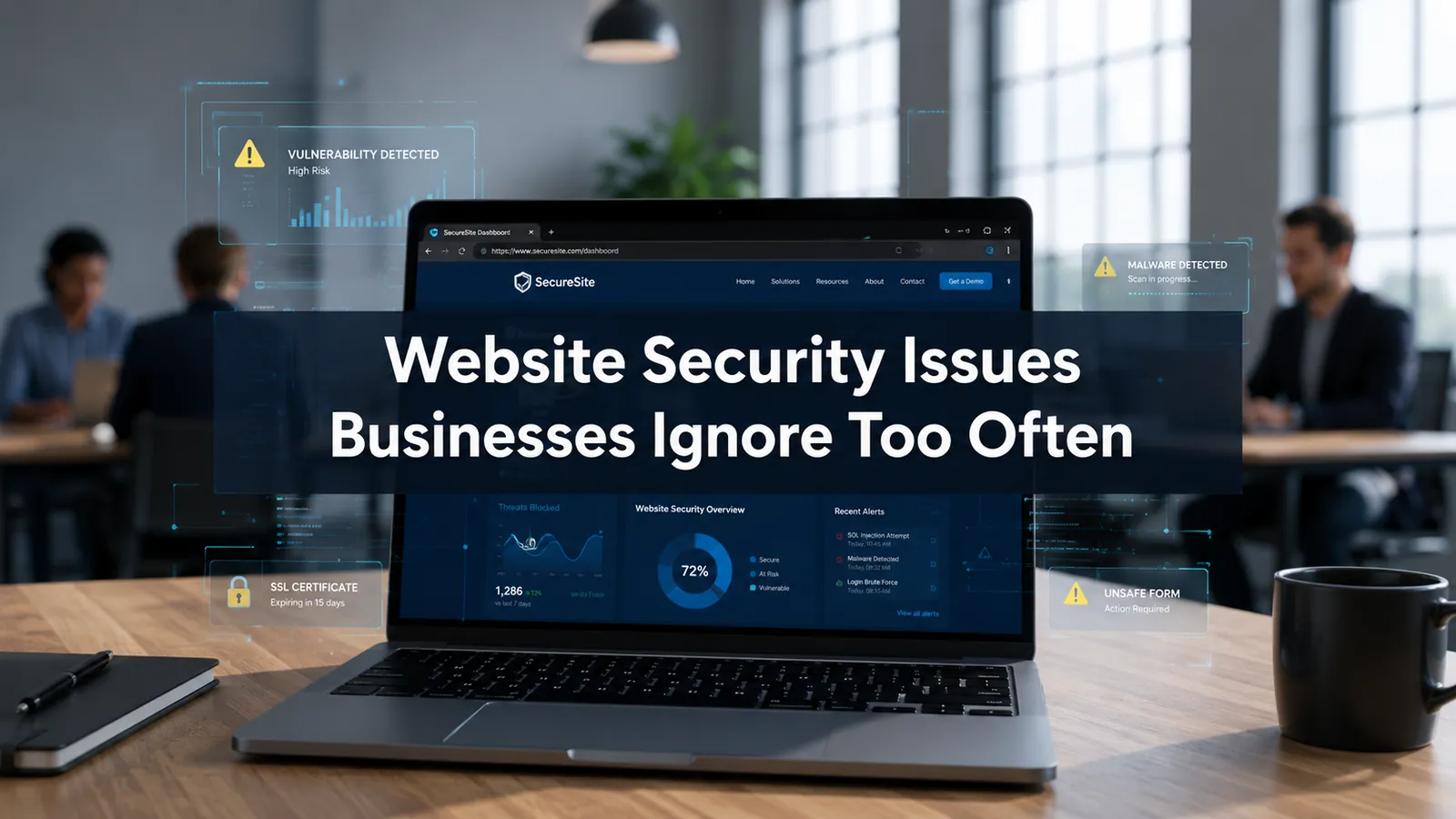
Common Website Security Issues Businesses Ignore
For many businesses, a website is treated as a finished task rather than a living system. Once the design is live and the pages load properly, security often slips into the background. This is where problems begin. Cyber risks rarely announce themselves, and the damage usually becomes visible only after trust, data, or revenue has been affected.
1. Outdated Software and Plugins
One of the most ignored issues is outdated software. Many business websites still run on old content management systems, plugins, or themes. Updates are delayed because the site “seems to be working fine.” In reality, outdated software can provide attackers with opportunities to exploit known vulnerabilities. Security patches exist for a reason. When they are skipped, known weaknesses may remain unaddressed.
2. Weak Passwords and Authentication
Weak password practices are another common problem. Admin panels protected by simple or reused passwords can make websites easier targets. In many cases, multiple team members share one login, making it difficult to track access and identify who made changes. Strong, unique passwords and two-factor authentication are important security measures, yet they are still overlooked by businesses of all sizes.
3. Poor User Access Control
Businesses also tend to ignore proper user access control. Not every employee or vendor needs full admin rights. Granting broad access increases the risk of accidental changes or intentional misuse. A small mistake by one user can disrupt an entire website or expose sensitive data. Assigning permissions based on each person's responsibilities helps reduce these risks.
4. Lack of Regular Backups
Lack of regular backups is another dangerous oversight. Many business owners assume their hosting provider handles everything. While hosting backups may be available, they might not be frequent, complete, or easy to restore. Without reliable backups, recovery after a cyberattack or server failure can become slow and costly. In some cases, businesses may need to rebuild parts of their websites from scratch.
5. Insecure Data Handling
Secure data handling is often treated casually. Contact forms, customer enquiries, and login details may be transmitted or stored without adequate protection. This puts user data at risk and can lead to legal and reputational consequences. Customers expect their information to be protected, even when dealing with a small or local business.
6. Missing Regular Security Audits
Another issue businesses ignore is the absence of regular security audits. Security threats and attack methods continue to evolve. What was considered secure last year may no longer be sufficient today. Without periodic checks, vulnerabilities can remain hidden until they are exploited. A professional security review helps identify weaknesses and prioritize corrective action before problems escalate.
7. Why Website Security Matters for Indian Businesses
For a growing software company in India, these risks are especially relevant. As businesses expand their online presence, protecting websites and customer information becomes increasingly important. Clients today expect not only performance and design but also responsible handling of their data.
8. How Izh Tech Approaches Website Security
At Izh Tech, website security is treated as an ongoing responsibility, not a one-time setup. From secure development practices to regular updates and access control, every layer matters. A secure website helps protect more than data. It also supports customer trust, brand reputation, and long-term business stability.
9. Make Website Security a Priority
Ignoring website security may save time today, but it can lead to much greater costs tomorrow. Businesses that take security seriously are better prepared to manage risks, maintain credibility, and support sustainable growth.