

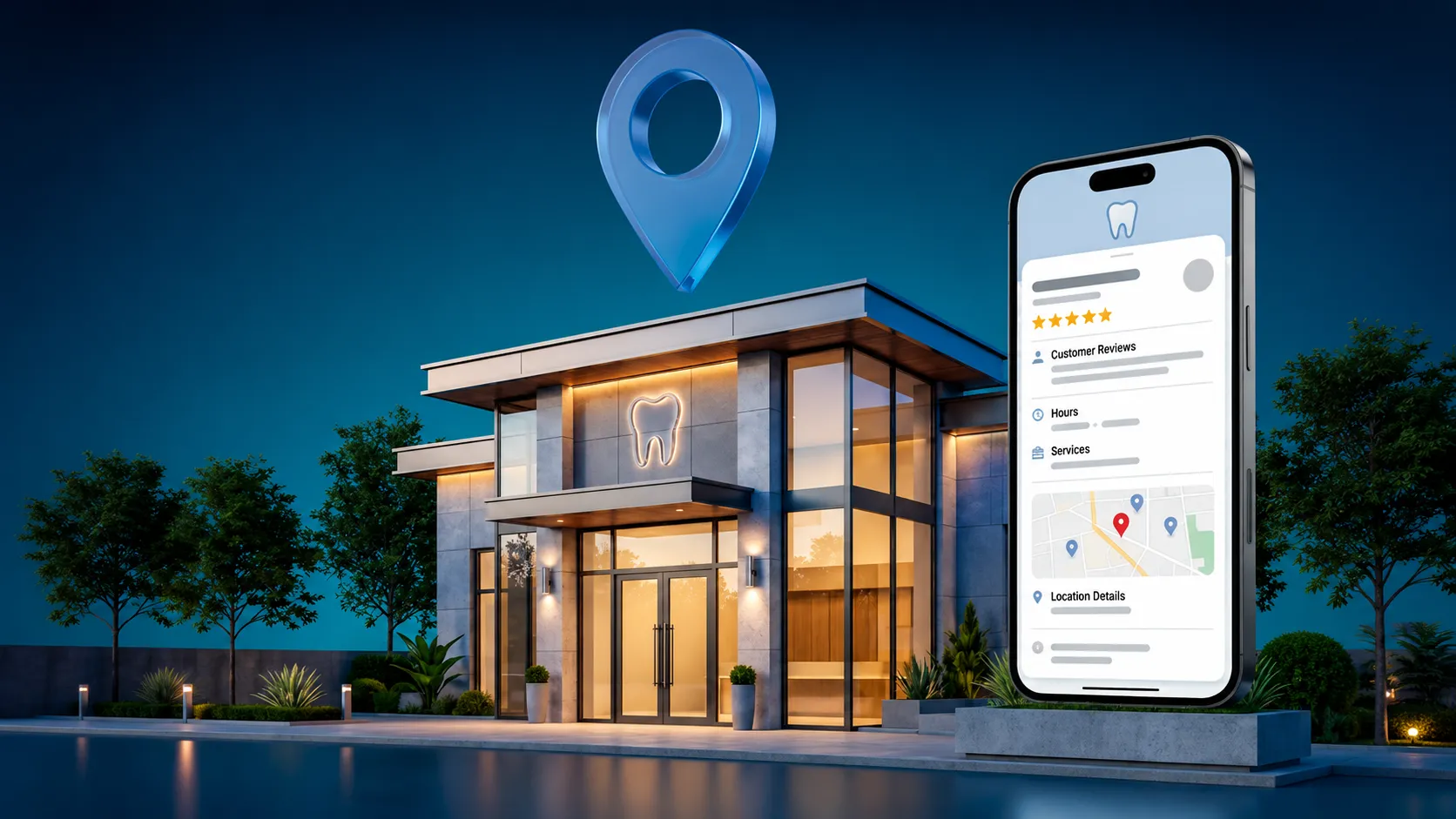
A dental practice in a single neighbourhood spends two years building a solid Google presence. The clinic sits comfortably inside the Map Pack for "dentist near me," patients call without hesitation and the front desk barely remembers a slow week.
Then the practice grows. A second branch opens across town. A new doctor joins and starts seeing patients under their own name. And, almost overnight, something strange happens — the original location that used to rank first quietly slips to the second or third spot and the new branch is nowhere to be found at all.
This is not bad luck and it is not a sign that the clinic's SEO "stopped working." It is a sign that the SEO setup was built for one address, one doctor and one Google Business Profile — and growth just asked it to do a job it was never built for.
If your clinic is expanding, this is the point where local SEO needs a genuine reset, not just an extension of what you were already doing.
Why Growth Is a Local SEO Reset, Not Just an Expansion
Google does not think of your brand as a single business. It thinks in terms of physical locations. Each address is treated as its own local entity, with its own relevance to nearby searches, its own proximity signals and its own trust score built from reviews, citations and activity.
That means the fundamentals covered in our earlier guide, Local SEO for Clinics: Rank on Maps, still apply — optimising your Google Business Profile, keeping your business details consistent and earning detailed patient reviews. What changes is that you now need to do all of it correctly, separately, for every location, without letting one branch undercut the other.
Most clinics get this wrong in one of two ways: they either treat the second location as an afterthought and barely touch its listing, or they duplicate everything from the first location word for word, which confuses Google rather than helping it.
One Google Business Profile Per Location — Not Per Doctor
The rule that trips up most growing practices is simple once it's explained, but rarely obvious in advance.
The Action: Create one Google Business Profile for every physical address where patients can walk in. Do not create a separate profile for each doctor unless that doctor operates independently, with their own bookable services and a distinct public-facing identity — for instance, a visiting specialist who consults on fixed days and is marketed as a standalone practice.
The Engine Tweak: Google's guidelines exist to stop one clinic from flooding local search with multiple listings for what is really a single entity at a single address. When a practice creates a profile for every doctor at the same location "just to be visible everywhere," it usually backfires — Google's system may flag the listings as duplicates, suppress them, or merge them without warning, taking your reviews and ranking history down with them.
If a doctor genuinely deserves their own presence, the safer route is a well-optimised page on your website, linked from the clinic's main profile, rather than a separate GBP that risks conflicting with it.
NAP Consistency Across Multiple Addresses
Every clinic learns NAP consistency — keeping your Name, Address and Phone number identical everywhere online — as a single-location rule. With multiple branches, the same rule becomes exponentially harder to follow, simply because there is more of it to get right.
The Action: Build a location-page template on your website before you list a second branch anywhere. Decide, once, exactly how each address will be written, which phone number belongs to which branch and how each location's name will appear (for example, "Central Park Dental Practice – Plymouth" versus "Central Park Dental Practice – [Second Location]"). Apply that format everywhere: Google, Facebook, local directories, insurance panels and your own site.
The Engine Tweak: Search engines cross-reference your business data across the web to decide how much to trust each listing. Two branches with inconsistent formatting don't just confuse patients — they weaken the trust signal for both locations at once, because Google struggles to confirm that either listing is accurate.
Building Location Pages That Don't Compete With Each Other
This is the structural problem that catches most growing clinics off guard: two location pages on the same website, written almost identically, start competing against each other in search results instead of ranking well individually. Google sees near-duplicate content and has to guess which page is more relevant — and often ranks neither one strongly.
The Action: Give each location page something genuinely unique. Mention nearby landmarks specific to that branch, name the doctors who see patients there, include location-specific patient reviews and describe anything different about that branch — different specialities offered, different clinic hours, or a different patient demographic.
The Engine Tweak: Unique, locally-anchored content gives each page its own reason to rank for its own neighbourhood searches, rather than forcing your two branches to fight over the same handful of keywords.
Reviews at Scale — Keeping Each Location's Reputation Independent
A single clinic can survive on a handful of strong reviews. A multi-location practice needs a repeatable system, or one branch quietly falls behind while the other keeps growing its review base.
As we noted in our earlier guide, the wording of a review matters as much as the star rating:
Low-value review: "Good doctor, nice service."
High-value review: "Best dentist in [Area] for root canal treatment — the [Branch Name] clinic team explained everything before starting."
The Action: Train the front desk at every branch — not just your original location — to ask for reviews consistently and to gently guide patients toward mentioning the treatment they received and the branch or neighbourhood name. In our experience working with growing clinics, it is almost always the newer branch that gets neglected in this process simply because the habit hasn't formed yet there — so it deserves deliberate, early attention.
The Engine Tweak: Location-specific language in reviews strengthens the exact local relevance signal Google is trying to confirm for that branch and it gives AI search tools clear, quotable proof of what each location is actually good at.
Voice Search and AEO for "Which Branch Should I Go To?" Queries
Multi-location clinics face a search pattern single-location practices never have to think about: patients comparing their own branches against each other, not just against competitors. Someone typing — or asking a voice assistant — "which [Clinic Name] branch is open now" or "does the [Area] branch have a paediatric dentist" is a real, growing query pattern as patients lean more on conversational search and AI assistants.
The Action: Add a short, clearly structured Q&A section to each location page that answers exactly these comparison questions — hours, specialities available and how that branch differs from the others.
The Engine Tweak: Structuring this as direct question-and-answer content, with the answer in the first sentence, makes it easy for both Google's featured snippets and AI search tools like ChatGPT or Perplexity to extract and serve the right branch to the right patient — instead of sending everyone to whichever listing happens to rank first.
Conclusion: Scale Your SEO Setup Before You Scale Your Clinic
The core principles of local SEO don't change as your practice grows — trust, consistency and clear, human information still win. What changes is the amount of discipline it takes to apply those principles correctly across every location, without letting one branch quietly undermine the other.
Clinics that plan their local SEO structure before opening a second location almost always avoid the dip in visibility that catches the rest off guard. Clinics that treat it as an afterthought usually spend months untangling duplicate listings and competing pages that could have been avoided with a proper setup from day one.
If you're planning to open a new branch, bring on another doctor, or you've already grown and noticed your rankings slipping, it's worth getting your local SEO structure right before it costs you visibility. At Izh Tech, we help growing clinics set up and manage local SEO across multiple locations the right way from the start. Contact us for a multi-location SEO audit.