

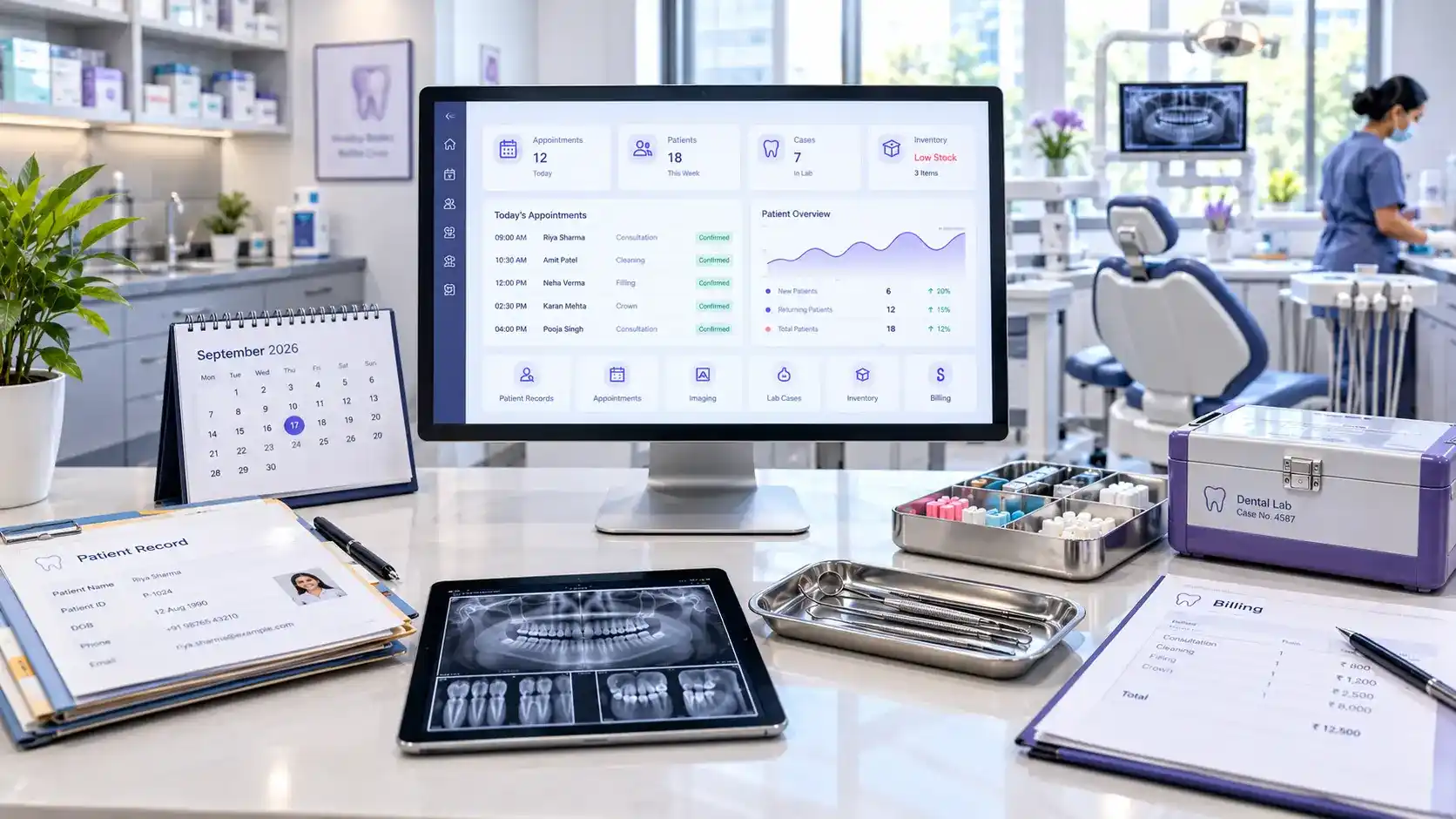
If you run a growing dental practice or manage a multi-chair clinic, you know that delivering excellent clinical care is only half the battle. Managing appointment calendars, tracking dental lab orders, controlling inventory, handling insurance claims, and managing billing can quickly overwhelm your front-desk team.
Many clinic owners rely on fragmented software tools—using one program for billing, another for patient records, and paper notes for inventory.
Upgrading to a unified Dental ERP (Enterprise Resource Planning) System consolidates your entire clinical, administrative, and financial operations into a single platform. However, picking the wrong system can cause operational friction, frustrate your staff, and waste significant capital.
What Is a Dental ERP and Why Does Your Practice Need One?
Unlike basic appointment-booking apps or standalone clinical software, a Dental ERP is an end-to-end management platform designed specifically for the operational workflows of a dental practice.
While a traditional EHR handles clinical notes, a Dental ERP connects your clinical operations directly to your back-office business functions—including inventory control, supplier management, staff payroll, and patient billing.
4 Essential Factors to Look for When Evaluating Dental ERP Software
1. Unified Clinical Workflows & Imaging Integration
Your dentist team shouldn't have to switch between different applications during a patient consultation. The ERP should natively support interactive dental charting, periodontal mapping, treatment planning, and digital X-ray/sensor (DICOM) integrations directly within the patient profile.
2. Automated Patient Engagement & Two-Way Scheduling
A great Dental ERP helps keep your chairs filled. Look for software that offers automated two-way WhatsApp or SMS appointment confirmations, post-procedure care instructions, and 6-month recall alerts. Systems with interactive messaging can reduce appointment no-shows by up to 40%.
3. Real-Time Dental Material & Lab Order Tracking
Managing dental consumables (implants, composites, PPE) and tracking external lab jobs (crowns, bridges, aligners) are major operational headaches. Choose an ERP that automatically updates stock levels as procedures are completed and alerts your team when lab cases are due back before a patient’s visit.
4. Cloud-Based Scalability & Multi-Location Reporting
If you plan to expand your practice or already operate multiple branches, a cloud-native Dental ERP is essential. It provides real-time access to clinical schedules, financial performance, and doctor productivity across all locations from a single centralized dashboard.
Comparing Standalone Practice Apps vs. a Unified Dental ERP
|
Operational Capability |
Standalone Practice Apps |
Unified Dental ERP System |
|
System Architecture |
Disconnected tools for billing, scheduling, and notes |
Single centralized cloud database |
|
Inventory & Material Management |
Manual spreadsheets / High waste |
Automated real-time stock alerts |
|
Patient Communications |
Manual staff calls or basic 1-way SMS |
Automated 2-way WhatsApp & SMS pathways |
|
Lab Order Tracking |
Paper logs (Risk of misplaced cases) |
Digital tracking tied to patient appointments |
|
Multi-Branch Scaling |
Difficult (Data silos between branches) |
Seamless multi-location reporting |
Take Control of Your Practice Operations
Selecting the right Dental ERP is an investment in your clinic's long-term efficiency, staff productivity, and profitability. By automating administrative tasks and unifying your clinical data, your team can focus on what matters most: delivering exceptional patient care.
Ready to Streamline Your Dental Practice Operations?
Discover how our specialized Dental ERP Platform can automate your scheduling, track inventory, and boost practice revenue.