
If you run a medical clinic, dental practice, or specialized care center, you already know the frustrating reality of the local healthcare market: getting a new patient through your doors is expensive, but keeping them coming back is even harder.
Every week, clinic owners watch thousands of rupees walk out the front door. A patient finishes their initial consultation, promises to return for their follow-up treatment, and then completely disappears.
Your front-desk team is already buried under a mountain of tasks—checking in walk-ins, taking incoming phone calls, managing billing, and organizing physical files. Expecting them to manually dial hundreds of past patients to remind them of 6-month checkups or missed follow-ups simply isn't realistic.
This hidden operational gap is where most clinics bleed revenue.
In 2026, sustainable practice growth isn't about spending more money on expensive digital ads to acquire a one-time patient. It is about automating patient retention—turning your initial consultations into lifetime care relationships.
The Silent Revenue Killer: The Post-Consultation "Black Hole"
Ask any busy clinic director what happens after a patient completes their first visit, and the answer is almost always the same: “Our staff gives them an appointment card and reminds them to book their next session.”
In the real world, life gets busy. The patient shoves the appointment card into their wallet, forgets about it by the time they reach their car, and only remembers their healthcare provider when a pain flare-up returns months later—if they don't accidentally book with a competitor down the road first.
When patient engagement relies on sticky notes, manual phone calls, or static Excel spreadsheets, your practice suffers from three main problems:
-
High No-Show Rates: Patients forget their appointments, leaving your expensive doctor slots completely empty.
-
Zero Continuity of Care: Chronic or multi-session treatment plans (like orthodontic work, skin care cycles, or physical therapy) get abandoned halfway through.
-
Stagnant Google Rankings: Happy patients leave without leaving a review because nobody asked them at the right time, while unhappy ones go straight online to complain.
How a Clinical CRM Automates Your Patient Retention Pipeline
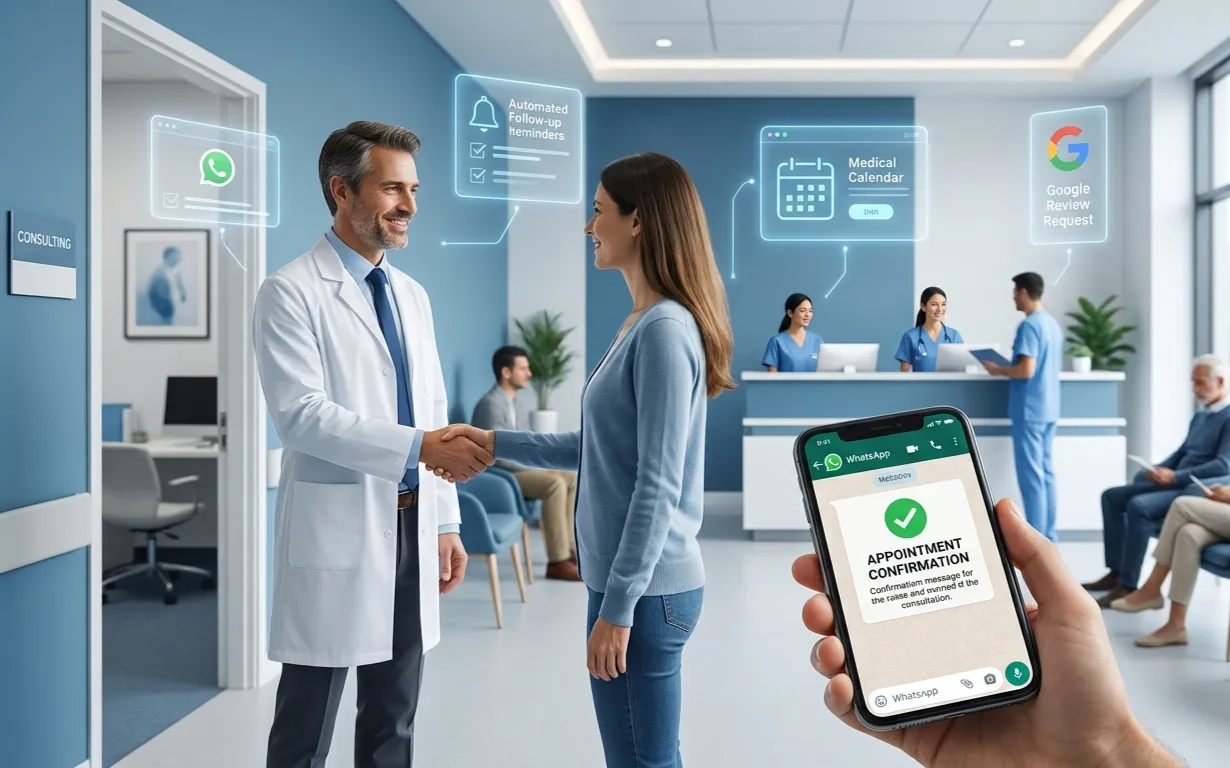
A specialized Clinical CRM isn't just a basic contact list; it is a retention engine designed around the specific daily rhythm of a medical practice. By syncing directly with your appointment schedule, it automates four critical patient touchpoints in the background.
1. Two-Way Interactive Reminders
Instead of an easily ignored one-way SMS, a Clinical CRM sends interactive, personalized messages over two-way WhatsApp or SMS 24 hours before an appointment. Patients can tap a single button to confirm, reschedule, or cancel. If a slot opens up unexpectedly, the system immediately alerts your waitlisted patients to fill the empty chair instantly.
2. Timed Post-Treatment Care Pathways
Patient loyalty is built on genuine post-procedure empathy. Instead of expecting a busy nurse to dial past patients at the end of an exhausting shift, the CRM automatically triggers care instructions tailored to the specific treatment.
[Automation - 2 Hours Post-Visit]: "Hi [Patient Name], Dr. [Name]'s team here! Here are 3 simple care tips for your teeth tonight..."
[Automation - Day 3]: "Hi [Patient Name], hope your recovery is smooth! Tap here if you need our care team to call you today."
3. Automated Preventive Health Recalls
Patients rarely remember when their 6-month dental cleaning, annual eye check, or quarterly skin maintenance is due. The Clinical CRM automatically tracks these individual medical timelines. When a patient hits their 180-day mark, the system sends a warm, personalized checkup reminder and books the appointment straight back into your calendar without your staff touching a keyboard.
4. Turning Patient Gratitude into 5-Star Local Search Rankings
Winning local health searches on Google Maps requires a steady stream of fresh, authentic patient feedback. Minutes after a patient completes an appointment, the CRM sends a polite, private feedback prompt. Highly satisfied patients are seamlessly directed to your Google Business Profile to leave a 5-star review, constantly boosting your local Map Pack ranking.
The ROI Breakdown: Manual Front-Desk Calls vs. Automated Clinical CRM
For a mid-sized clinic managing roughly 1,000 appointments per month, the financial math behind manual versus automated follow-ups is clear:
|
Operational Metric |
Manual Staff Calls (Traditional) |
Automated Clinical CRM (Modern) |
Real Impact on Your Clinic |
|
Front-Desk Time Spent |
~100 hours/month spent dialing and leaving voicemails |
0 hours (Workflows trigger automatically in background) |
100 staff hours freed up for front-desk hospitality |
|
Average No-Show Rate |
18% – 25% (Patients lose paper reminder slips) |
5% – 8% (Interactive WhatsApp confirmations cut missed slots) |
100+ empty slots recovered every month |
|
Direct Labor Expense |
₹20,000 – ₹30,000/mo in dedicated phone staff time |
Built into software subscription |
Direct monthly reduction in staff overhead |
|
Patient Retention / Recall |
~15% (Staff rarely has time to call patients from months ago) |
~65% (Automated recall triggers fire on schedule) |
+50% increase in repeat patient lifetime value |
|
Google Reviews / Month |
3–5 reviews (Only when staff manually remembers) |
50–100+ authentic reviews/mo |
Dominates Local Google Maps organically |
EHR vs. Clinical CRM: Why Your Clinic Needs Both
A common question clinic owners ask is: "Doesn't my current EHR or clinic management software already handle this?"
The simple answer is no.
An Electronic Health Record (EHR) system is built for retrospective medical documentation—storing clinical notes, generating prescriptions, handling billing, and maintaining medical records. It is not designed to actively engage patients or build relationships.
|
Traditional EHR / EMR |
Specialized Clinic CRM |
|
Patient Medical History |
Automated WhatsApp Recalls |
|
Prescriptions & Lab Reports |
Interactive No-Show Fillers |
|
Billing & Invoicing |
Post-Treatment Care Messages |
|
Doctor Consultation Notes |
Google Review Generation |
|
↓ Manages the Clinic |
↓ Grows the Practice |
By pairing your existing EHR with a specialized Clinical CRM, your medical team continues documenting care smoothly while your retention and patient-communication engine runs on total autopilot.
Stop Letting Your Patients Drift Away to Competitors
You don't need to double your advertising spend to grow your clinic revenue—you simply need a smarter, reliable system to care for the patients who already know, trust, and visit your doctors.
Our specialized Clinical CRM bridges the gap between your treatment rooms and patient care communication.
Ready to Plug the Revenue Leaks in Your Practice?
See how our Clinical CRM can automate your patient recalls, eliminate missed appointment slots, and fill your doctor schedules month after month.
Book a Free 15-Minute Live Demo for Your Clinic.